
Growing Businesses & Enterprise
Coworking Space vs. Office Lease in Toronto

Fahad Jilani
Founder, Jilani Place
Last updated
Most of the small business owners I talk to assume signing a commercial lease is the responsible adult decision. It is the move that says you are a real company. The truth is messier. Long leases sink more growing businesses than they support, because the company you signed for in year one is rarely the company you have in year three.
I am in an unusual position to talk about this. Through Jilani Group, I lease commercial space to traditional office tenants on standard multi-year terms. Through Jilani Place, our coworking space at 295 The West Mall in Etobicoke, I rent private offices on flexible monthly memberships. I see what each model costs and what each one actually delivers. That is the lens I am writing from. This is not a pitch for coworking; it is an attempt to give you the comparison I wish more people were making before they signed.

What a traditional office lease actually involves
When most people picture renting office space, they picture base rent: a per-square-foot number quoted by a leasing agent. That is only half of what you will actually pay. In Ontario commercial leases, tenants pay TMI (Taxes, Maintenance, and Insurance) on top of base rent. Industry sources put TMI at 40 to 50 percent of total occupancy cost in many GTA buildings, and Avison Young data cited in Q2 2025 reporting found that average additional rent across the GTA equaled roughly 58% of net asking rent.
Let me put that in numbers an Etobicoke or Mississauga business owner would actually see. According to the Toronto Regional Real Estate Board's Q2 2025 Commercial Report, the average office lease rate across the network was $20.84 per square foot, up from $17.55 a year earlier. Class A space in the GTA West submarket ran closer to $27 per square foot net in 2025 based on Q2 market data. Add TMI of $7 to $10 per square foot, and a small business is paying $34 to $37 per square foot, all in. For a team needing 1,500 square feet (a tight fit for eight people), that is $51,000 to $55,000 per year before utilities, internet, furniture, or insurance.
Then there is the build-out. JLL's Global Office Fit-Out Cost Guide 2025 documents Toronto fit-out expenses ranging from CAD $385 to $642 per square foot for professional services firms. For that same 1,500-square-foot space, that is $577,000 to $963,000 in upfront capital before a single client sits across from you. Most landlords offer a tenant inducement allowance, but it rarely covers the whole bill.
And the commitment is real. Mayfair Law Group, a Toronto commercial real estate firm, notes that most commercial leases run 3 to 10 years, with 3 to 5 years being standard for small business space. Commercial tenants in Ontario are governed entirely by the Commercial Tenancies Act, which is far less protective than the residential equivalent. If your business contracts, you remain on the hook for the full term.
That is the real picture. Base rent is the headline number. Total occupancy cost (rent + TMI + utilities + fit-out + insurance + furniture) is what you actually pay.
What coworking actually gives you (beyond the buzzword)
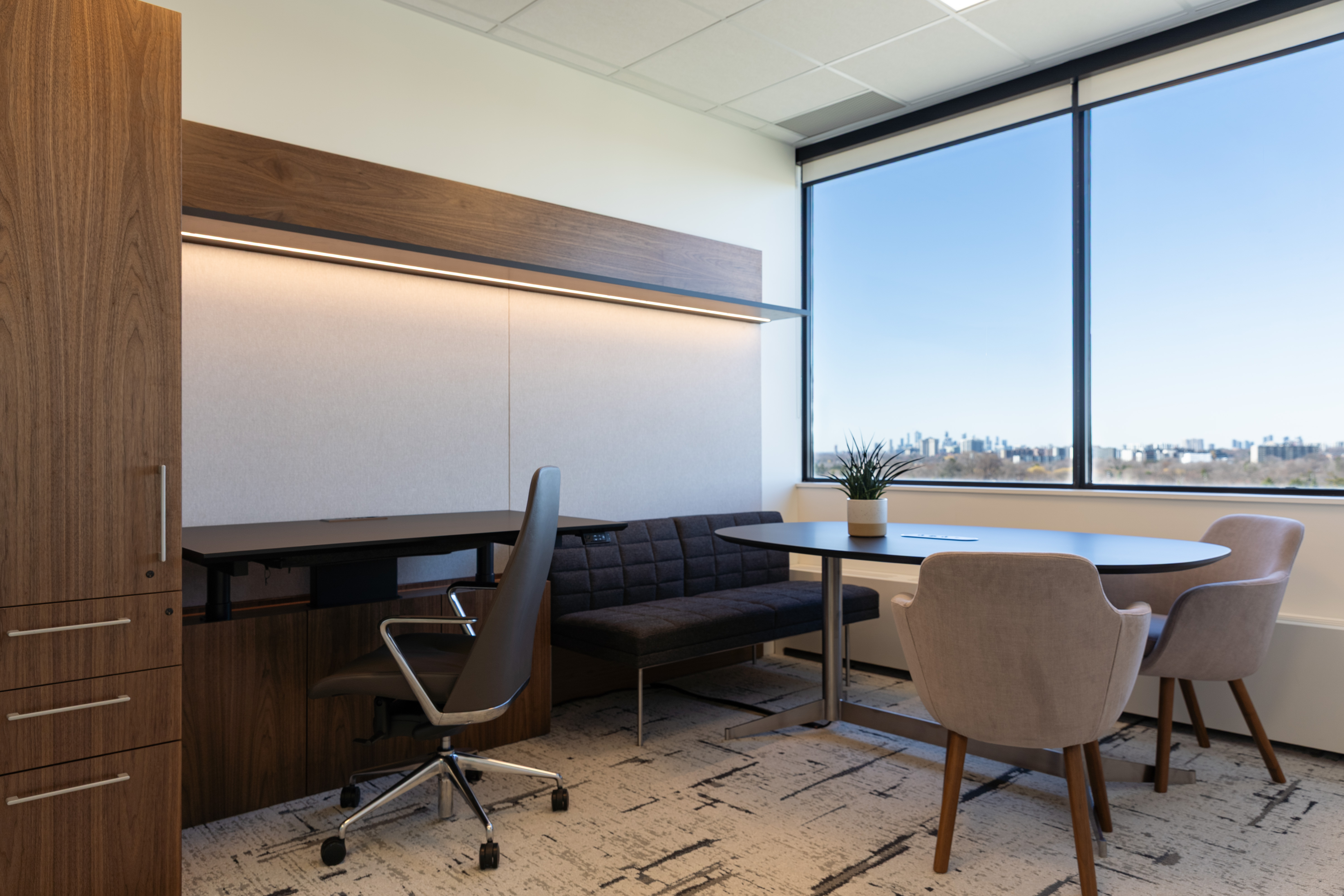
Coworking earned a bad name from its excesses (hot-desk culture, ping-pong tables, the WeWork meltdown). Strip the noise away, and what coworking really sells is two things: shorter commitments and bundled overhead.
The category has matured into legitimate commercial real estate. According to Optix's 2025 Canadian coworking market analysis, the Canadian coworking sector was valued at roughly USD $285 million in 2023 and is projected to nearly triple to $893 million by 2030, a 17.6% compound annual growth rate. There are approximately 883 coworking locations across Canada as of mid-2025, with Ontario holding roughly 48% of the national market. Cushman & Wakefield reports that 55% of global corporations now use flexible office solutions, and 17% plan to expand their use. This is not a fringe play; it is mainstream commercial real estate strategy.
A typical private office membership at a quality coworking space includes:
- A furnished, lockable private office
- High-speed internet, utilities, cleaning, and security
- Access to shared boardrooms and meeting rooms (often included or via monthly credits)
- A staffed front desk for guest reception and mail
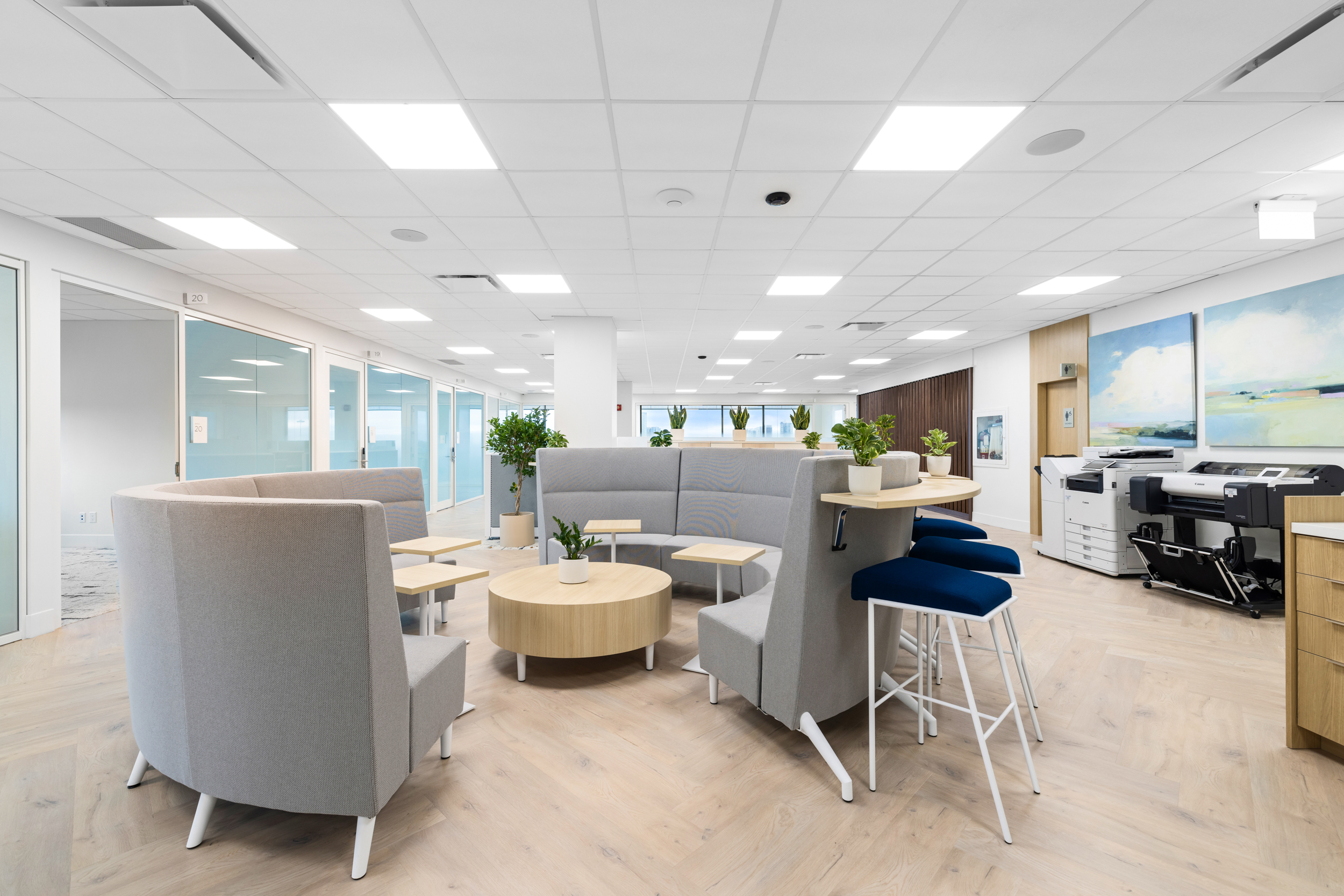
- Kitchen, lounge, and printing facilities
- A professional business address registered for your company
The mechanic is simple. You trade a higher per-square-foot rate for the elimination of every line item that adds up under a traditional lease. No fit-out, no separate internet contract, no insurance broker, no furniture budget, no cleaner on payroll, no receptionist. And no five-year commitment.
For a 1- to 10-person business looking at flexible office space in Etobicoke or Mississauga, the all-in monthly cost of a private coworking office often lands close to or below the all-in cost of a traditional lease for equivalent space, once you factor in the items most lease comparisons quietly leave out.
Side-by-side comparison
| Factor | Traditional office lease | Coworking space |
|---|---|---|
| Upfront cost | $50,000 to $1M+ for fit-out, deposits, furniture | First and last month's membership |
| Monthly cost (small team) | $4,000 to $8,000+ all-in | $1,500 to $5,000+ depending on office size |
| Lease commitment | 3 to 10 years standard | Month-to-month up to 12 months |
| Flexibility | Low. Subleasing requires landlord approval. | High. Scale up or down with notice. |
| Amenities included | None. Build and pay for everything. | Internet, utilities, cleaning, boardrooms, reception, address |
| Fit-out responsibility | You. Often six or seven figures. | Done. Move in furnished. |
| Scalability | Renegotiate or relocate to grow | Add or remove offices as headcount changes |
| Best for | 15+ team, brand-specific build, stable headcount | Solo to 10-person team, client-facing, growth or transition |
When a traditional lease makes more sense
I am not going to tell you coworking is right for everyone. It is not. A traditional lease is the better call when:
You have 15 or more people on payroll.
At a certain headcount, the per-employee cost of coworking exceeds what you would pay net on a long lease. The crossover point varies by operator and market, but in the GTA West it tends to land somewhere around 12 to 18 desks.
You need a brand-specific build-out.
If your business runs on physical environment (a design studio, a clinic, a showroom, a workshop), the standardized aesthetic of a coworking space will not carry your identity. You need to build a space that looks like you, and that requires control over the walls, the layout, and the finish.
You have predictable, stable team size and revenue.
If you have been at 20 people for five years and do not expect to deviate meaningfully, a properly negotiated lease is often the cheaper option once amortized over the term.
If you are in that bucket, a real commercial lease is worth its weight. That is the side of the business I run through Jilani Group, where we work with traditional office tenants on multi-year terms across our commercial portfolio. The economics work for the right tenant. They just do not work for every tenant.
When coworking makes more sense
Coworking is the better call when:
You have a team of 1 to 10 people.
This is the sweet spot. The math works clearly in favour of flexibility at this size, and the bundled amenities replace overhead you would otherwise build from scratch. This is one of the most common small business office options in Toronto for a reason.
Your work is client-facing.
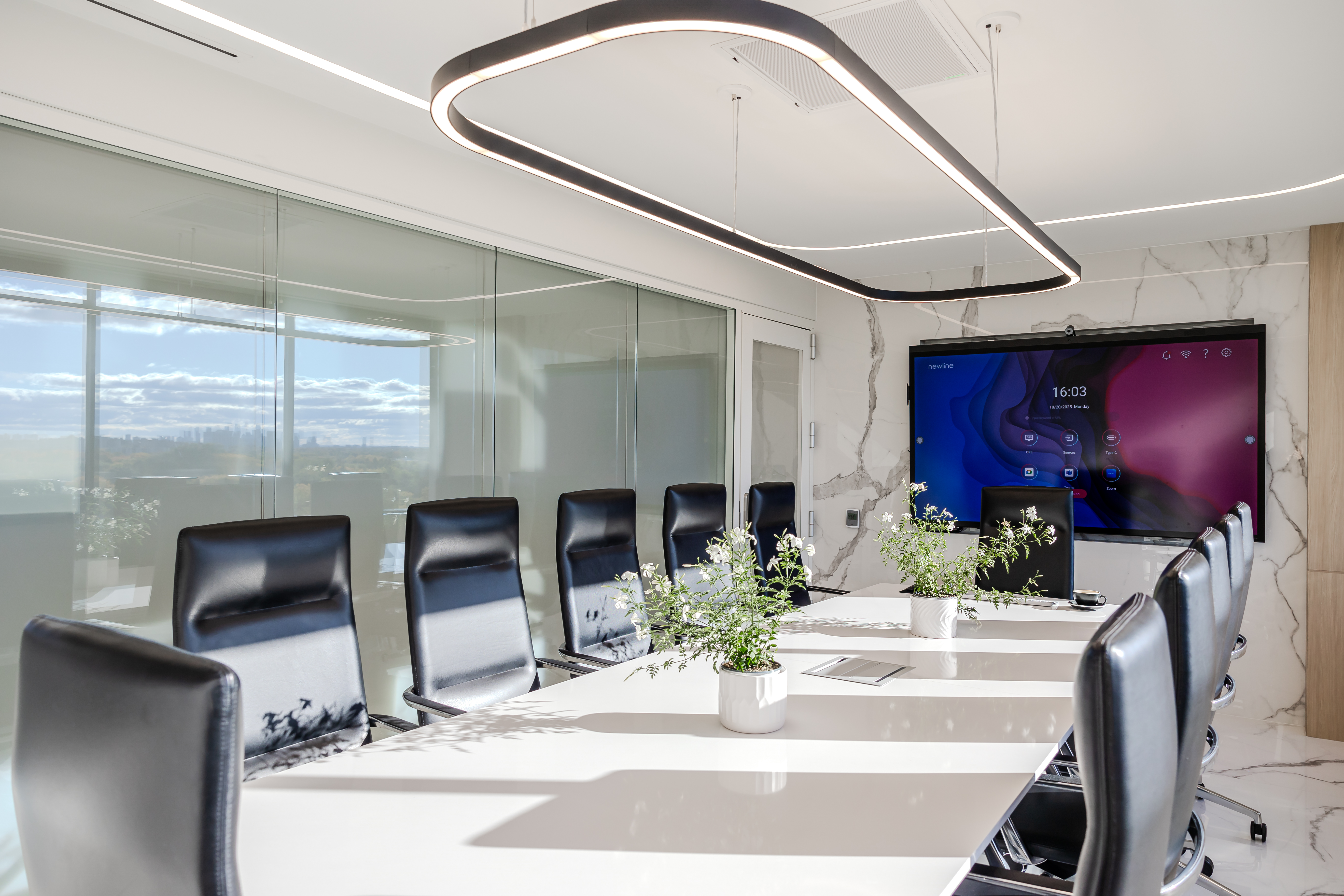
If clients visit you, the experience matters. Bringing them into a half-furnished sublease in a tired building does damage you cannot easily measure. A professional address, a staffed front desk, and a real boardroom signal a level of stability that a small team usually cannot build alone.
You are in a growth or transition phase.
If your headcount is moving (up, down, or sideways), committing to a multi-year lease is a bet against your own optionality. Coworking lets you size your space to your business, not the other way around.
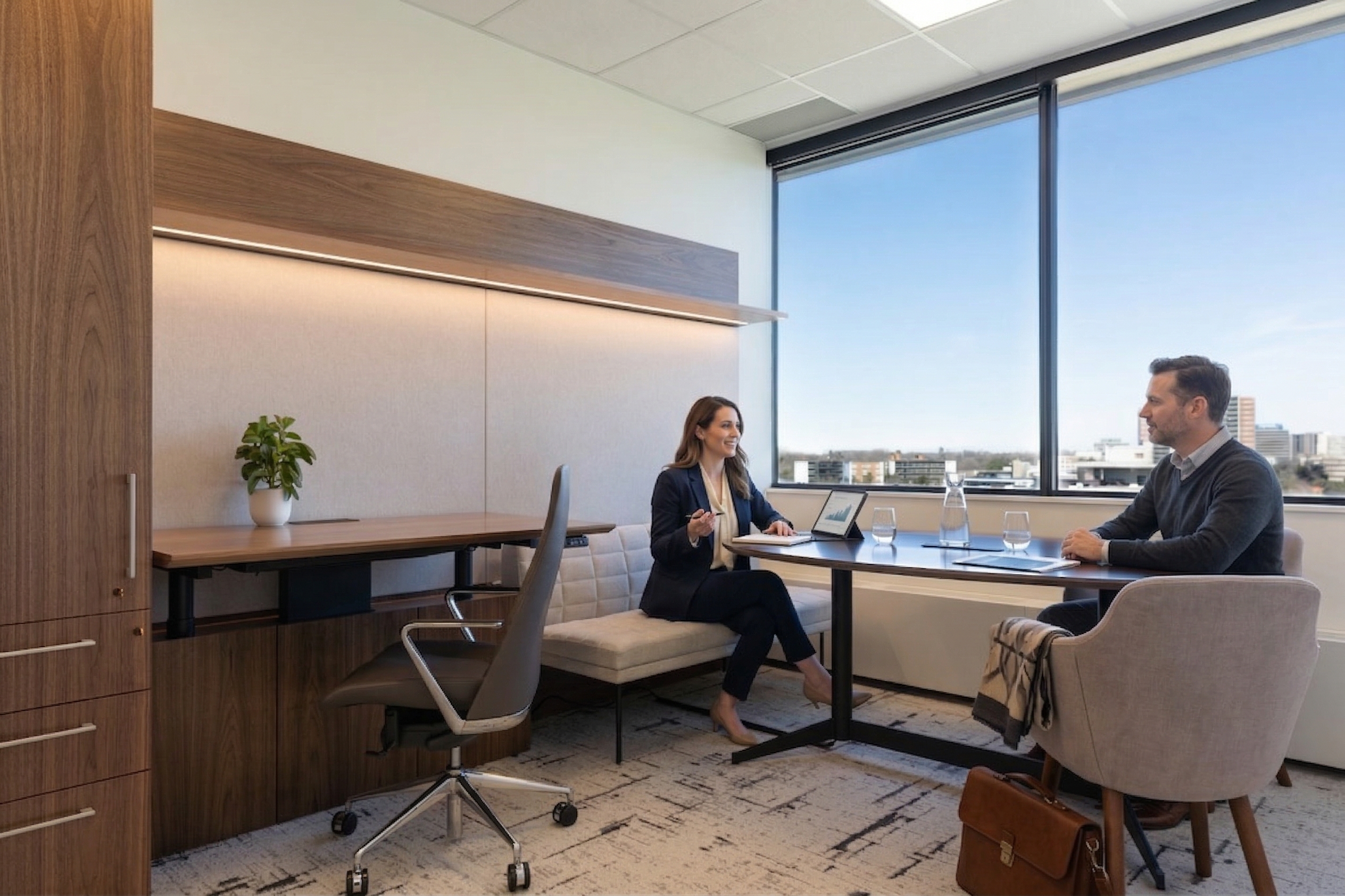
That is the side I created through Jilani Place, where business owners take private offices in Etobicoke without committing to five years to do it. If you want to see what that actually looks like in practice, book a tour and walk the space. It is the fastest way to know if it is a fit.
Frequently Asked Questions
Is coworking cheaper than renting office space in Toronto?
For small teams of 1 to 10 people, it usually is, once you compare total occupancy costs rather than just base rent. Industry sources note that advertised rent represents only 40 to 65 percent of actual workplace cost. When you add TMI, utilities, fit-out amortization, furniture, internet, cleaning, and insurance to a traditional lease, coworking generally comes out ahead per person. For larger teams (15+), traditional leases tend to win on a per-square-foot basis once amortized.
Can I use a coworking space as my business address?
Yes. Most coworking spaces, including Jilani Place, allow members to register their business at the location and receive mail there. This gives you a credible commercial address without the cost of a standalone office, and it is accepted by the CRA, banks, and provincial business registries.
What is the minimum commitment for a coworking membership?
It varies by operator. Most coworking spaces offer month-to-month memberships, with discounts for 6- or 12-month commitments. Compare this to a standard commercial lease, which typically runs 3 to 5 years for small business tenants. The flexibility differential is the entire point of the model.
Is coworking professional enough for client meetings?
That depends on the specific coworking space. The category includes everything from cafe-style hot-desk environments to premium facilities with private offices, staffed reception, and executive boardrooms. If client perception matters, the question is not "is coworking professional enough" but "is this specific coworking space professional enough." Tour it. Walk through as if you were one of your clients. The space should answer the question for itself.
When does it make sense to stop coworking and sign a lease?
When three conditions are true at once: your headcount has stabilized above 12 to 15 people, you need a build-out specific to your operations, and you are confident enough in your revenue trajectory to commit for 5 years. If any one of those is not solid, coworking is still likely the lower-risk option. I have watched plenty of businesses sign leases too early because it felt like the next step. The next step is whatever keeps your fixed costs as low as your situation actually allows.
My take
I run both sides of this business, so I have no incentive to push you in either direction. What I will tell you is what I have watched play out across hundreds of tenants over the years.
The companies that signed the right-sized lease at the right time are the ones that knew exactly what they were signing for. The ones that ran into trouble were almost always trying to look more established than they were, or trying to lock in a "deal" that became a liability when their plans changed.
The right choice depends entirely on where your business is right now, not where you hope it will be in three years. Hope is a bad reason to commit to half a million dollars of fixed cost. If you are a small team that has outgrown the home office and you want a professional space without betting the business on it, coworking is what was built for you. If you are past that stage and ready to invest in a long-term home, a proper lease will serve you well.
Either way, do the math on total cost, not headline rent. That is the single piece of advice that matters most.
Fahad Jilani is the Founder of Jilani Place.