
Private Offices
Hidden Costs of Leasing Office Space in Toronto

Fahad Jilani
Founder, Jilani Place
Last updated
The base rent on a Toronto commercial lease is usually the smallest line item on the deal. Once you stack additional rent, buildout, furniture, IT, utilities, insurance, and end-of-term reinstatement, the all-in monthly figure typically lands 1.5 to 2 times higher than the per-square-foot rate on the term sheet. Avison Young's Q2 2025 GTA reporting puts average additional rent alone at roughly 58% of net asking rent, and that's before you've spent a dollar making the space usable.
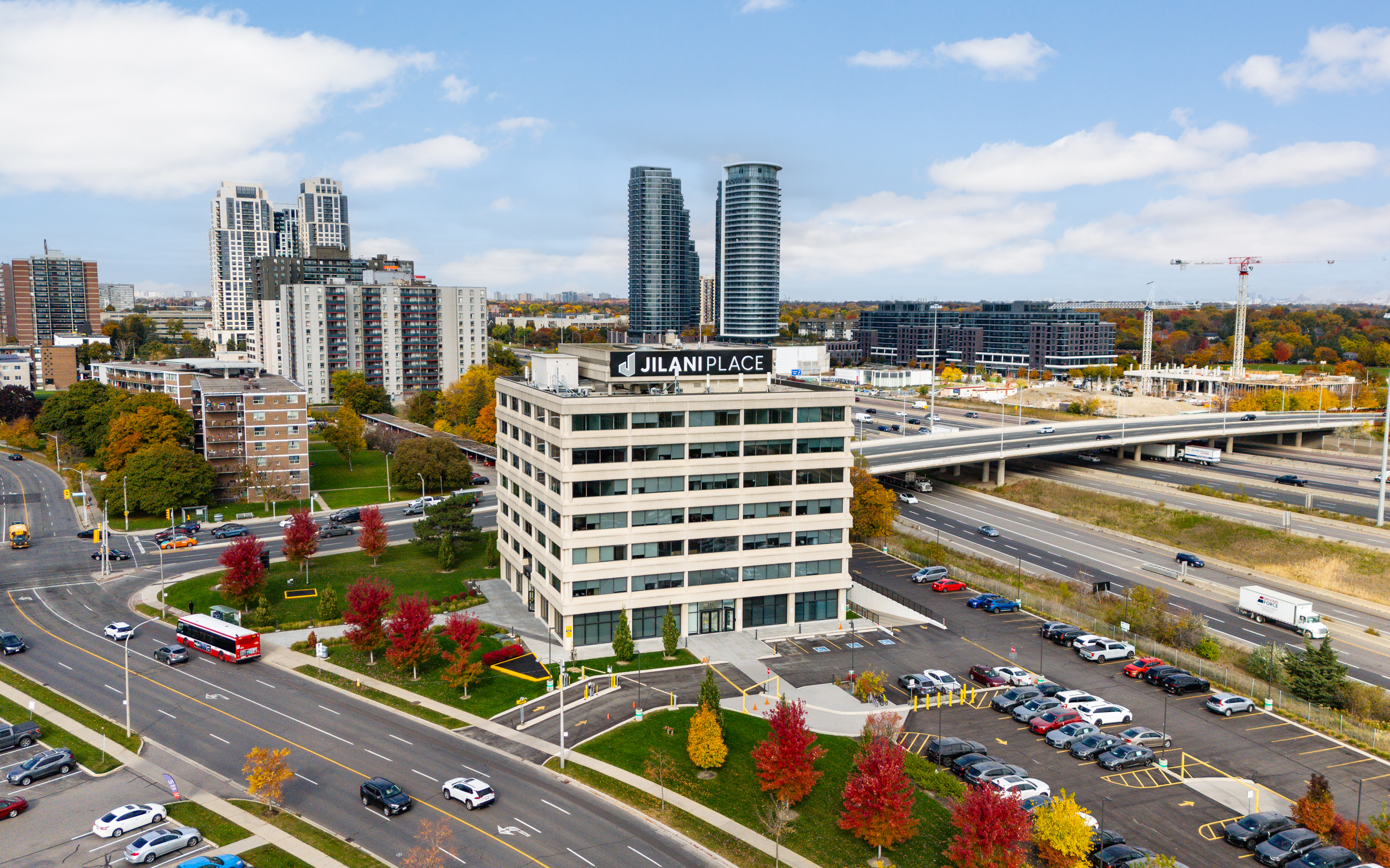
I created Jilani Place, but Jilani Group, has been on the landlord side of commercial real estate for years. I've watched plenty of growing businesses sign leases without modeling the full cost, and I've watched a handful of those same businesses ask me 18 months later whether I have anything available month-to-month. I'm not anti-lease. Sometimes a lease is exactly the right call. The point of this article is to make sure you go in with the real number, not the broker's number.
Here's what's actually in the deal.
1. Additional rent (TMI) is roughly half of what you pay
In a Toronto net lease, the per-square-foot rate the broker quotes you is the base rent. On top of that you pay TMI: Taxes, Maintenance, and Insurance. This is the landlord's recovery of property taxes, building operating costs, and insurance, charged back to tenants on a square-foot basis.
In downtown Toronto Class A buildings, TMI commonly runs $20 to $30 per square foot. In Etobicoke and the suburban GTA, expect $12 to $20. Using Avison Young's figure that TMI averages around 58% of net asking rent, a $25 net quote often becomes roughly $40 gross before utilities or HST. CBRE's Q1 2026 Canada Office Figures shows Toronto continuing to lead national net absorption with downtown Class A vacancy at its lowest level since Q3 2022, which means landlords currently have less incentive to absorb cost increases on tenants' behalf.
A few things to confirm in writing before signing:
- Is TMI quoted as an estimate or actual cost recovery? Most leases reconcile annually, which means a year-end true-up bill if the landlord underestimated.
- Are in-suite utilities inside or outside TMI? In multi-tenant office buildings, in-suite electricity is often separately metered and billed direct to tenant.
- Is there a cap on controllable operating expenses? Without one, your TMI can climb 4 to 6% annually for the full term of the lease.
2. Buildout costs more than tenants expect
Most office space is delivered either as base-building shell or as second-generation space left behind by a previous tenant. Either way, you'll need work done before you can move in. New paint, flooring, demising walls if you want private offices, electrical capacity for a real workstation count, network cabling, and probably a kitchenette.
JLL's 2025 U.S. and Canada Office Fit-Out Cost Guide pegs the average Canadian moderate-quality office fit-out at roughly $278 CAD per square foot. Even at the lower end of the range, $150 to $200 per square foot is realistic for a basic Class B build in the GTA. For 2,000 square feet, that's $300,000 to $560,000 in buildout cost.
Landlords offset some of this with a Tenant Improvement Allowance (TIA), typically $15 to $60 per square foot depending on building class, lease term, and how strong your covenant looks. In a competitive Class A deal with a creditworthy tenant signing 7 years, you might get $40 to $60. In a Class B suburban building with a 5-year term and a young business, $15 to $30 is more typical. Anything beyond the allowance is your money up front. Or, more commonly, the landlord amortizes the overage into your rent, which means you pay it back with interest over the term.
A few realities to plan for:
- Design fees typically run 5 to 10% of construction.
- Permits and inspections add another 2 to 5%.
- Lead times in the GTA right now are 3 to 5 months from lease signing to occupancy. You may pay rent during part of that period unless you negotiate fixturing time.
3. Furniture, IT, and infrastructure are not optional
Once the space is built, you have to put things in it. For a team of 8, here's what I'd realistically budget:
- Desks, chairs, monitors, conference table, lounge area: $25,000 to $45,000 for mid-range office furniture.
- Network infrastructure (switches, access points, structured cabling, firewall): $8,000 to $20,000 depending on what you need.
- Phone system, printer, AV in the meeting room: $5,000 to $15,000.
- Kitchen equipment, signage, art, plants: $3,000 to $10,000.
- Access control and security: $3,000 to $8,000.
That's $44,000 to $98,000 in upfront capex before anyone shows up for their first day. When we built Jilani Place, we deployed Ubiquiti infrastructure across the entire building, so I have a fairly clear sense of what real office IT costs to set up properly. The numbers above are honest, not padded.
The temptation is to defer some of this and "make do" with what the team brought from home. Don't. A second-rate setup eats more time and goodwill than the savings are worth. If you're going to spend $40,000 a month on rent, your team deserves chairs that don't hurt their backs and Wi-Fi that doesn't drop on a Zoom call.
4. The monthly operating costs you'll keep paying
Even after buildout, several monthly costs sit outside both base rent and TMI in most office lease structures:
Cleaning
Almost always tenant responsibility in office leases. Expect $0.30 to $0.60 per square foot per month, so $600 to $1,200/month for 2,000 square feet.
In-suite utilities
Often separately metered. Hydro alone for a fully built-out office runs roughly $0.80 to $1.50 per square foot per year.
After-hours HVAC
This one surprises every first-time tenant. Most office buildings turn HVAC off outside of business hours (typically 7am to 7pm weekdays). Working a Saturday or staying past 8pm on a Tuesday triggers a per-hour HVAC charge, usually $50 to $200 per hour depending on the building.
Waste removal, pest control, supplies, coffee, water service
Small individually, $300 to $800/month combined.
5. Insurance, legal, and deposits
Before you move in, you'll write a few cheques most term sheets don't mention:
- Commercial general liability insurance. Required by virtually every commercial lease, usually $2 million minimum coverage. $1,500 to $4,000/year.
- Tenant property insurance. Separate from CGL, covers your contents and improvements. $1,000 to $3,000/year.
- Legal review. Don't skip this. A commercial lease lawyer in Toronto runs $2,000 to $5,000 to review and negotiate the document. Worth every dollar. I've seen tenants sign leases with personal guarantees they didn't realize were in the agreement.
- Security deposit. Typically the equivalent of 3 to 6 months' gross rent (base + TMI + HST), held by the landlord for the duration of the lease. For a 2,000 square foot space at $40 gross, that's $20,000 to $40,000 sitting with the landlord earning you nothing.
6. The lease term itself is a hidden cost
Most Toronto landlords want a 5-year minimum. On new buildouts they'll often push for 7 to 10 years to amortize the TI allowance. CBRE research has noted the average prime office lease term in recent years runs around 9 years. That length is the cost nobody prices: optionality.
If your headcount drops, you're stuck. If it doubles, you're squeezed. Most leases include subletting provisions, but they almost always require landlord consent (rarely unreasonably withheld in writing, frequently delayed in practice). The sublease market is deeply tenant-unfriendly when overall vacancy is high. CBRE's Q1 2026 figures show 10.7 million square feet of sublet space still on the Canadian market, the equivalent of every business in the country having 11 quarters of inventory to compete against if you ever need to offload your space.
The tenant who signs a 7-year lease in 2026 is making a prediction about their own business in 2033. Most growing businesses cannot make that prediction with any accuracy.
7. End-of-term reinstatement
Here's the clause nobody reads until move-out: most commercial leases require you to return the space to base-building condition at the end of the term. If you built out (added walls, ran cabling, installed kitchen plumbing, hung signage), you may have to demolish all of it before handing back the keys. Reinstatement costs for a typical office buildout run $20 to $60 per square foot. On 2,000 square feet, that's another $40,000 to $120,000, and it lands at the worst possible moment: when you're already paying to move and set up somewhere new.
You can negotiate this. The clause to ask for is "no obligation to remove leasehold improvements except those identified by the landlord at lease commencement." Most landlords will accept some version of it. Few will volunteer it.
The honest math: lease vs. private office
Let's run the numbers for a hypothetical 8-person team in 2,000 square feet of suburban Toronto Class B office on a 5-year lease.
Lease scenario, annualized
- Base rent at $20/sqft: $40,000
- TMI at $14/sqft: $28,000
- In-suite hydro and utilities: ~$2,500
- Cleaning: ~$10,800
- Insurance (CGL + property): ~$3,500
- Buildout, net of $30/sqft TIA, amortized over 5 years: ~$40,000
- Furniture and IT, amortized over 5 years: ~$12,000
- After-hours HVAC, supplies, coffee, misc: ~$5,000
Annual all-in: roughly $141,800. Monthly equivalent: roughly $11,820.
Plus a security deposit of $25,000 to $40,000 sitting idle for the term, plus $3,000 to $5,000 in legal at signing, plus your time managing the buildout, plus the reinstatement bill in year five.
Private office at a flex space comparison
An 8-person private office at a place like Jilani Place runs $4,000 to $6,000/month all-in. That includes rent, utilities, internet, cleaning, furniture, access to meeting rooms, coffee, reception, and IT infrastructure. Annual: $48,000 to $72,000. No buildout, no security deposit beyond a normal first-and-last, no reinstatement clause, and far more flexibility on term.
The difference is somewhere in the range of $70,000 to $90,000 per year. For a team of 8, that's a full hire.
I'm not telling you the lease never wins. At larger scales (15+ people), in specialized space, or for businesses that need to brand their environment heavily for client visits, a direct lease can absolutely make financial sense. But the comparison rarely gets run honestly. Most term sheets quote you the base rent. Few brokers walk you through the full picture before you sign.
What to do with this
If you're seriously considering a Toronto office lease, do three things before signing anything:
- Ask your broker for a fully-loaded annual cost estimate that includes TMI, utilities, cleaning, insurance, and amortized buildout. Not the gross rate. The all-in.
- Hire a commercial lease lawyer to review the document. The $3,000 you spend will save you 10x that over 5 years.
- Compare the all-in monthly figure to a private office at a flex space at the same headcount. If the lease still makes sense, sign it with confidence.
If the math is uglier than the term sheet suggested, that's worth knowing now rather than 18 months in. Our private offices in Etobicoke fit teams from 2 to 12, with no buildout, no TMI surprises, no security deposit at landlord scale, and no 7-year commitment. If you'd like to walk the space and run the comparison side by side, book a tour and we'll go through your numbers together.
Fahad Jilani is the Founder of Jilani Place.