
Meeting Rooms
How to Run a Great Investor Pitch Meeting

Fahad Jilani
Founder, Jilani Place
Last updated
Most founders over-prepare the deck and under-prepare everything around it. Your slides are probably fine. What loses pitches is the operational layer: the room, the AV, the hybrid setup, the front-of-house experience, the follow-up. I've watched enough investor meetings happen inside our boardroom at Jilani Place to know that the founders who land the second meeting almost always run the logistics tighter than the founders who don't.
This article skips the deck and story advice you've already read. I want to talk about everything else.
What investors are actually evaluating in the room
Investors pattern-match. By the time you open your deck, they've already formed an early read on you based on how the meeting was scheduled, how you greeted them, where you put them, and whether the screen worked on the first try. None of this is fair. All of it is real.
CB Insights' long-running analysis of why startups fail keeps surfacing the same root causes: running out of cash, no market need, getting outcompeted, team issues. When investors sit across from you, they're screening against those same risks. The pitch is a proxy. Operational competence in a one-hour meeting is one of the cheapest signals they have for whether you'll execute under pressure.
That's why the meeting environment matters. A founder who can't get HDMI working in front of three partners is showing them something. A founder whose wifi cuts out during a live demo is showing them something. You don't get to explain it away.
The room sends a signal before you open your mouth
I'll be direct. Pitching from a coffee shop, a home office, or a generic shared conference room each tells the investor something specific about your stage and your judgment.
Coffee shops are fine for first coffees. They're not fine for a partner meeting. The noise floor alone makes a serious conversation hard, and the lack of a screen forces everyone to crane over a laptop. Home offices work for early Zoom calls but break the moment you need to host more than yourself. Generic conference rooms in a downtown tower can work if you've got the budget, but renting a daily executive suite for a one-hour meeting often costs more than people expect and still feels transactional.
What you actually want is a room that does three things at once: it removes friction (everything works on the first try), it removes noise (visual and auditory), and it signals that you take the meeting seriously without performing wealth you don't have. My background before Jilani Place was commercial real estate with the Jilani Group, and one thing I learned watching how capital allocators move through space is that they notice the small stuff. Frayed cables, flickering monitors, a receptionist who doesn't know they're coming. The signal isn't "this founder is rich." The signal is "this founder runs a tight operation."
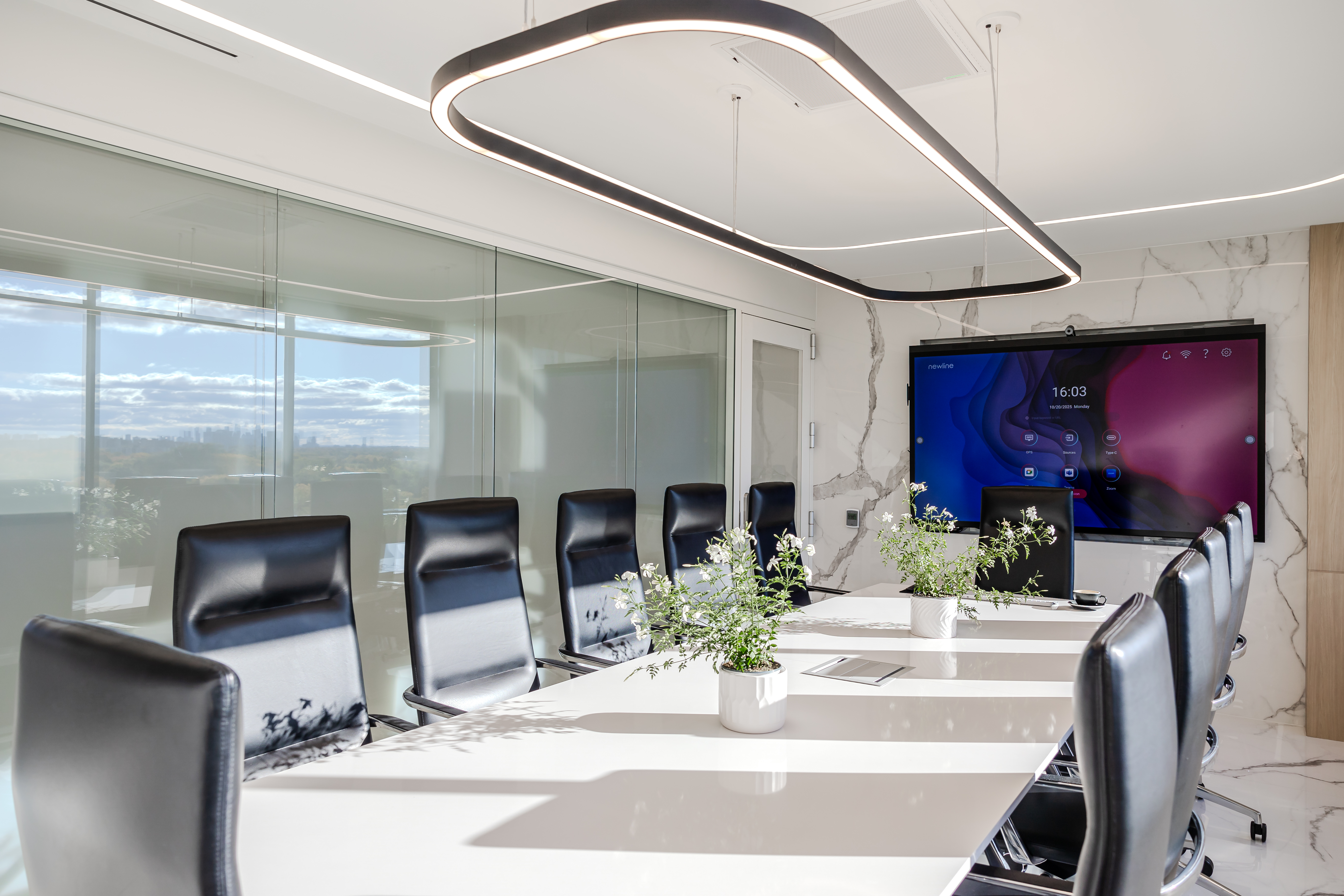
We designed our boardroom at Jilani Place specifically for this kind of meeting. Members book it for investor pitches, board meetings, and key client presentations. The room sits inside a quiet, professional environment with a coffee shop attached, which means investors arrive, get offered a real espresso, and walk into a space that's set up before they sit down.
The logistics checklist that actually matters
Here's what I'd make sure is handled before any pitch meeting, whether you run it at our place or anywhere else.
AV that works on the first try
HDMI in, USB-C in, AirPlay, and a video conferencing setup for any partners joining remotely. Test it the day before, not the morning of. Our boardroom has all of this preconfigured, but if you're pitching in a space you haven't used, get there 30 minutes early and run a test.
Wifi that doesn't drop during a live demo
This sounds obvious. It is not. Most coworking spaces and many small offices run consumer-grade networking that buckles when you're doing a screen share with eight devices on the same network. We run Ubiquiti enterprise infrastructure throughout Jilani Place specifically because a single dropped connection during a live product demo can end a meeting. If you're pitching elsewhere, ask the venue what their network is and have a mobile hotspot as backup.
A whiteboard or large display
When the conversation goes well, it stops being a deck walkthrough and becomes a working session. Investors will start sketching, asking you to draw your unit economics, asking you to map out the customer journey. You want a surface for this.
A room that fits the meeting
Three partners in a 12-person boardroom feels cavernous and wrong. Three partners crammed into a four-person huddle room feels desperate. Match the room to the meeting size. We sometimes recommend members shift their booking to a different room when they tell us how many people are coming.
Front-of-house
Who greets the investor when they arrive? Where do they wait if they're early? What are they offered? At Jilani Place, our community manager Tamar handles this directly. Investors get checked in, walked to the boardroom, and offered coffee from the in-house café. You as the founder are not running around trying to find your guest in a lobby. You're already in the room, ready.
Pacing the meeting itself
A 60-minute pitch meeting is not 60 minutes of pitching. The rough split that works for most early-stage meetings: 5 minutes of human conversation at the start, 15 to 20 minutes of structured pitch, then 30 to 35 minutes of questions and discussion. If you're still presenting at minute 25, you've lost the room.
The hardest skill is shutting up. When an investor asks a question, answer it and stop. Don't keep selling. Silence after your answer is not your problem to fill. Founders who cannot tolerate silence end up oversharing, walking back claims, and looking nervous. The investors are taking notes. Let them.
Read the room. If the partner who said the least is suddenly leaning forward, that's your buyer. Direct your next answer to them. If everyone has gone quiet and the energy has dropped, ask a question instead of pushing harder. "What's the part of this you're most skeptical about?" is a better move than another slide.
The hybrid pitch problem
Half the partners are in person. Half are on Zoom. This is now the default and it is brutal to run well.
The failure mode is that the in-person partners dominate, the remote partners check out, and you don't realize it until the follow-up email never comes. To fix it: put a wide-angle camera at the far end of the table so remote attendees can see the whole room, not just your face. Use a real conferencing mic, not your laptop's. Address remote partners by name regularly. Pause longer than feels natural to give them time to unmute.
Our boardroom is set up for hybrid meetings out of the box, with conferencing audio and video that picks up the whole table. If you're pitching somewhere else, walk through the hybrid setup before the meeting starts. A hybrid pitch that's clearly an afterthought tells remote partners they were an afterthought, and they will pass.
Materials to have ready beyond the deck
In the meeting or right after, expect requests for:
- A one-page summary
- Access to your financial model
- A data room link with cap table, customer references, and key contracts
- Founder bios and references
Have all of this prepared in a single follow-up document or shared folder. The founders who send it within the hour stay top of mind. The founders who take a week to assemble it watch the deal cool.
The follow-up window
The 24 hours after the meeting matter as much as the meeting itself. Send a brief thank-you that references something specific from the conversation, not a templated message. Attach or link the materials they asked for. Note any commitments they made (an intro, a follow-up call) so the next exchange has a clear next step.
Most founders fumble this because they're exhausted. Build the follow-up email as a draft before the meeting starts, then customize it after. It takes 10 minutes and it's the difference between staying in the funnel and falling out.
If your next pitch is coming up
If you've got an investor meeting in the next few weeks and you don't have a room you'd actually want to host it in, come tour Jilani Place. The boardroom, the AV setup, the front-of-house, the coffee shop downstairs: all of it is built for the kind of meeting where the small details decide the outcome. Book a tour and see whether it's the right fit for your next pitch.
Fahad Jilani is the Founder of Jilani Place.