
Growing Businesses & Enterprise
When to Upgrade From Coworking to a Private Office

Fahad Jilani
Founder, Jilani Place
Last updated
If you're a 2 to 10 person team in coworking and wondering whether it's time to upgrade, the answer isn't tied to your headcount. It's tied to three questions: are you spending more on desks than a private office would cost, are you changing your behavior to fit the space, and are you planning to hire in the next six months? Two yeses and it's probably time. One yes and you're fine where you are.
Most "when to upgrade" advice defaults to team-size thresholds, as if four people is some magic number. In my experience running Jilani Place, and working in commercial real estate with Jilani Group before that, headcount is a lagging indicator. Plenty of eight-person teams thrive in coworking. Plenty of three-person teams should have upgraded six months ago. The signals that matter are economic and behavioral, not numerical.
The cost crossover most teams miss
Here's the part most blog posts hand-wave. Run the numbers.
Premium dedicated desks in GTA coworking spaces generally run between $500 and $750 per month, depending on the building, the amenities, and what's bundled. Multiply that by your team size. A four-person team is looking at $2,000 to $3,000 per month in dedicated desk fees alone, before you factor in any add-ons or extra meeting room time.
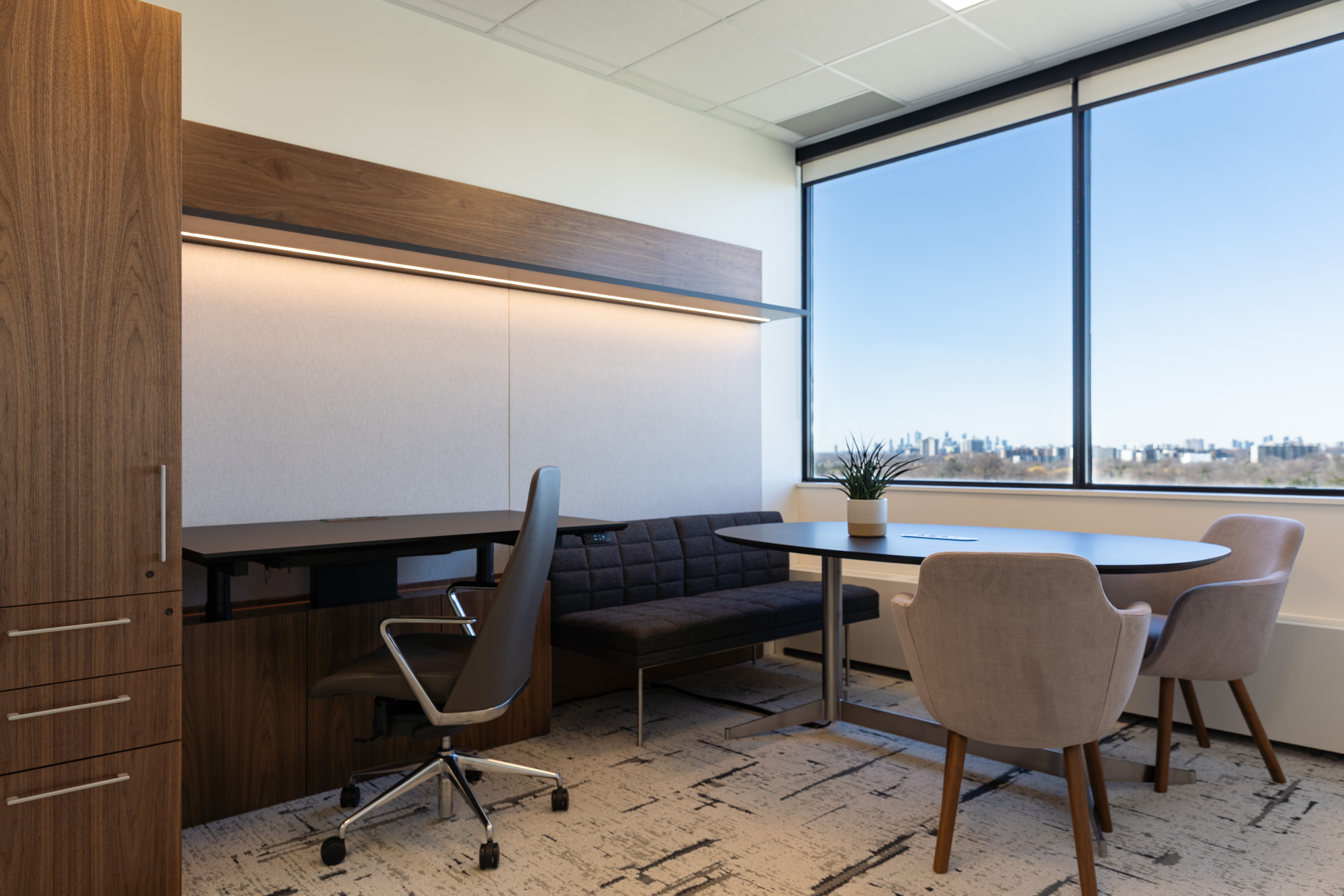
Now look at private office pricing in the same buildings. A small private office inside a flex coworking environment in the GTA typically lands between $2,200 and $3,500 per month, with everything bundled (internet, utilities, cleaning, meeting room credits, reception). The crossover usually happens around four to six dedicated desks.
This is the conversation I have most often with growing teams who tour Jilani Place. They've been in coworking for two or three years, the team has crept up to five or six people, and when we put the numbers side by side, they're already paying private office money for shared space. The math has been telling them to upgrade for months. They just hadn't stopped to do the math.
Behavioral signals that beat headcount
Cost is one half of the decision. The other half is how your team is actually working day to day.
The five signals I see most often in teams who are ready to upgrade:
1. Calls are getting awkward
You're booking phone rooms three times a day, or worse, your team has gotten in the habit of taking sensitive calls in stairwells and parking lots. If half your work is on the phone or on video, and the space wasn't built around that, you're working against the building.
2. You're hoarding a meeting room as a de facto office
When the same team books the same boardroom every Monday through Friday from 9 to 5, the space is telling you something. So is the front desk.
3. Whiteboarding and persistent work surfaces matter
Some teams need to leave a wall of post-its up for two weeks. Coworking can't accommodate that. If your work is iterative and visual, you need walls you can claim.
4. Client-facing presence has become a sales factor
This one matters more than founders admit. When you're closing five-figure deals or pitching investors, the space you bring people into is part of the signal you're sending. A reception that says your company name on the wall, a private boardroom with your laptop already plugged in, a door that closes; these things move deals at the margin.
5. Your IT and equipment are outgrowing shared infrastructure
Most coworking spaces are built for laptop-and-headset workers. If your team needs persistent hardware (monitors, docks, design rigs, networked equipment), you're going to keep bumping up against the shared-space ceiling. We built Jilani Place's network on Ubiquiti enterprise infrastructure for exactly this reason, and even then, dedicated equipment belongs behind a door.
The hiring trajectory question
This is where I push teams hardest, because the cost of getting it wrong is high in both directions.
If you're planning to hire two or three people in the next six months, lock in space now. Coworking is built around flexibility, but the operational cost of moving a growing team mid-hiring-spree is brutal. New hires onboard in chaos. The team you already have spends weeks distracted by the move instead of doing the work. And in a tight market, the private office you wanted is gone by the time you actually need it.
The reverse is also true. If hiring is paused, if your runway is uncertain, or if you're not sure the team you have is the team you'll keep, don't upgrade on optimism. A private office is a fixed cost. Coworking flexes. Use the right tool for the actual situation, not the situation you're hoping for.
When you're not ready
Half the teams I talk to about upgrading shouldn't. Reasons to stay in coworking longer than you think you should:
- Your hiring is genuinely uncertain. If the next six months could mean five new hires or zero, coworking is the right structure. You're paying for optionality.
- Your team values the energy and network of a shared environment. Some teams operate better with the ambient activity of other companies around them. If your team is in coworking specifically because they don't want to feel isolated, putting them behind a door is a downgrade, not an upgrade.
- You haven't pressure-tested your remote and hybrid balance. If you don't actually know how often your team needs to be in person, you can't size an office correctly. Six months of consistent attendance data beats six months of square footage you're not using.
- Your runway doesn't match a lease. Even flex private offices come with month-to-month or annual commitments. If you're not confident you'll be in the same building twelve months from now, the coworking dedicated desk model is doing exactly what it should be doing for you.
What "upgrading" actually looks like in 2026
Worth resetting expectations on what we're even talking about.
When I started in commercial real estate, "upgrading to a private office" meant signing a five-year direct lease, putting up tens of thousands in buildout, and hiring someone to manage the IT and the cleaners. That option still exists, and for some teams it's the right one. For most growing teams, it's the wrong one.
The version of upgrading most growing teams should consider is a private office inside a flex coworking environment. You get the door, the dedicated equipment, the team room you need. You keep the meeting rooms, the reception, the kitchen, the network infrastructure, and the option to scale up or down as the team changes. No buildout, no IT contracts, no commercial lease attorney. The friction is closer to changing your dedicated desk plan than to signing a lease.
This is the model we built Jilani Place around. Most of the growing teams who move into our private offices were in our coworking space first. The transition is operationally trivial. They keep their meeting room credits, their member accounts, their relationship with the building. They get a door.
A simple decision framework
If you take one thing from this article, take this. Three questions:
- Are you paying more in dedicated desk fees than a comparable private office would cost?
- Are you changing how your team works to accommodate the space, instead of the other way around?
- Will your headcount in six months justify the square footage?
Two yeses and it's time. One yes and you have time. Zero yeses and stop reading articles about upgrading until something changes.
Headcount alone isn't the trigger. It's a useful data point, but it's the one founders fixate on because it's the easiest to measure. The teams I see make the upgrade well are the ones who treat it as an economic and operational decision, not a milestone.
If you're inside that two-yes window and want to walk through the actual numbers for your team, I'm happy to do that in person. We do tours at Jilani Place where I'll sit down with you, look at what you're paying now, and tell you honestly whether moving into one of our private offices makes sense for your situation. Sometimes the answer is yes. Sometimes it's "give it three more months." Either way, you'll leave with the math.
Fahad Jilani is the Founder of Jilani Place.