
Independent Professionals
What Is a Coworking Space and How Does It Work?

Tamar Gagnidze
Community Manager
Last updated
At least once a week, someone walks into Jilani Place for the first time and asks the same question: how does this actually work? Here's the short answer. A coworking space is a shared workplace you access through a flexible monthly membership instead of a commercial lease. You get a desk (or a private office), fast wifi, meeting rooms, coffee, a front desk, and other people working alongside you. No furniture to buy, no five-year commitment, no landlord to call when the AC quits.
That's the version on paper. After a few years running the front desk, I can tell you that what coworking is on paper and what it feels like in practice are two different things. Here's both, in plain language.
How memberships actually work
Most coworking spaces sell access in tiers. The names vary, but the structure is fairly consistent across Toronto:
Day passes
One day of access, usually $25 to $50 depending on the space. Good for trying somewhere out, or if you need a desk for an afternoon. We sell these at Jilani Place; people often use them as a test drive before committing to anything monthly.
Hot desk membership
A monthly plan that gives you access to any open seat in the common area. You don't have a fixed spot; you grab whichever desk is free when you arrive. Best for people who only need to come in a few days a week and don't need to leave equipment overnight.
Dedicated desk
Your own permanent desk in the open area. You can leave your monitor, your books, your good chair. It's still in a shared room, but it's yours. Best for people coming in most weekdays who want consistency.
Private office
A lockable room for one person or a small team. Same shared amenities, but you have your own door, your own quiet, and somewhere to leave a whiteboard up. This is what people upgrade to when they're hiring, or when their work is too sensitive to do in an open room.
Most memberships are month-to-month with 30 days' notice to leave. No long lease, no commercial real estate negotiation. That flexibility is most of the appeal.
What's typically included
The amenities vary by space, but at any legitimate coworking space you can expect:
- Wifi that doesn't drop on a video call (this is not a given; ask before you sign)
- Access to meeting rooms, usually with a monthly credit allowance
- A kitchen with coffee, tea, and filtered water
- Print, scan, and copy
- Mail and package handling at the front desk
- Cleaning and maintenance
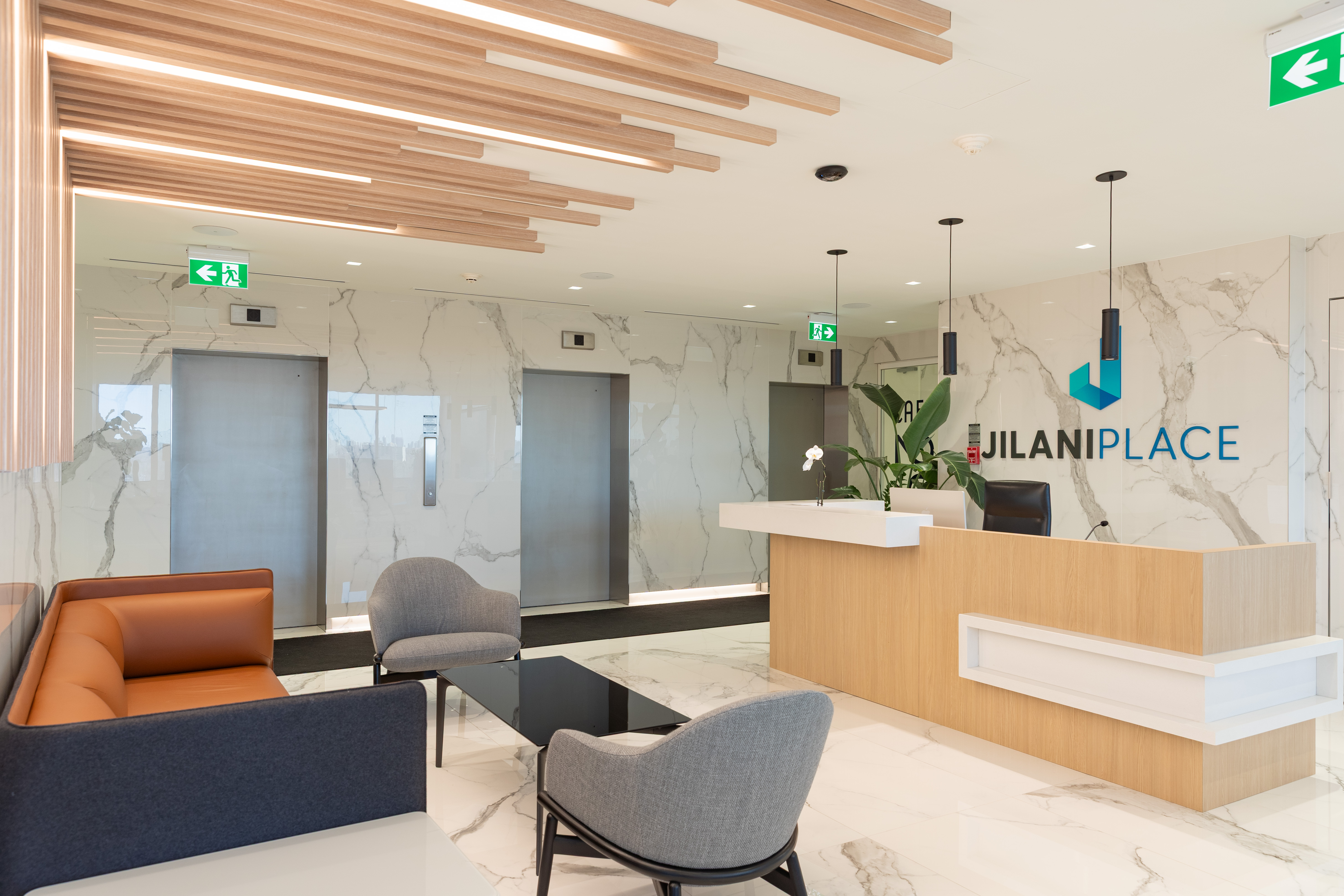
- A real person at reception to greet your clients
Beyond the basics, spaces differentiate. Some include podcast rooms, phone booths for calls, event space, or fitness rooms. The cheaper end of the market tends to skimp on the things you actually notice while working: soundproofing, meeting room availability, and whether anyone is at the front desk when your client shows up.
Who actually uses coworking spaces
A lot of people assume coworking is mostly tech startups and freelance designers. It isn't. On a typical Tuesday at Jilani Place, the room includes a mortgage broker between client meetings, a few people working remotely for companies headquartered out of province, two co-founders who finally got tired of meeting at coffee shops, a salesperson on back-to-back calls in a phone booth, a lawyer reviewing contracts, and a couple of grad students writing.
The common thread isn't the industry. It's that none of them want to work from home, none of them want to work out of coffee shops, and none of them need (or can justify) their own private commercial lease. That describes a large share of the working population in Toronto right now, particularly since 2020 reset what most people are willing to tolerate from a work environment.
What coworking isn't
A few things people walk in expecting that aren't quite right.
It isn't a co-op or a startup incubator. You're not pitched on, recruited into, or forced to network with anyone. You pay a fee and access a workspace; the social part is optional.
It isn't an open-concept office where everyone collaborates all day. Most of the time it's quieter than a coffee shop, with people heads-down on their own work. Community forms on the edges (kitchen conversations, events, mutual introductions), not by mandate.
It also isn't a coffee shop with reliable wifi. The price reflects what you're actually getting: meeting rooms, mail handling, a real desk, soundproof phone booths, and the assumption that you'll be there long enough to need printer access. If you only need wifi for two hours, a coffee shop is cheaper. If you need to run your work life from somewhere, the math tips the other way.
What a typical day looks like
Quieter than people expect. Most coworking spaces, ours included, run on an unspoken rule that the main floor is for focused work. People take calls in phone booths or meeting rooms, not at their desks. Conversations happen in the kitchen, not over open laptops.
When you arrive, you scan in or check in at the front. You grab coffee, find a seat (or unlock your office), and start working. If you have a meeting, you book a room from your phone. If your client arrives, the front desk lets you know. If something breaks, someone fixes it. Around lunchtime the kitchen fills up and the people who've been around a while start saying hi to each other. By 4pm, the room thins out.
There's a community element if you want one, and there isn't if you don't. I've had members work next to each other for a year before introducing themselves, and I've had members become each other's first clients within a month. Both are fine. The point of the space isn't to force you into anything; it's to give you a serious place to work, with the option of company.
How to figure out if it's right for you
The honest test is to try one. A tour gives you the architecture: the layout, the light, the chairs, the meeting rooms. A day pass tells you what the wifi is actually like at 2pm, whether the chairs hold up after four hours, and whether the room is quiet enough for the kind of work you do.
A few signs coworking is worth a look:
- You've been working from home for a while and your focus has been sliding
- You're meeting clients at coffee shops and it's starting to feel unprofessional
- You're paying for a small private studio you only use part-time
- You've outgrown the kitchen table but a commercial lease feels like overkill
- You miss having other people around, even just in the background
If any of those land, the next step isn't a year-long commitment. It's a tour or a day pass somewhere local. Worst case, you spend $35 and learn something useful. Best case, you find a place that makes the work week noticeably better.
A note from the front desk
If you're in the west end of Toronto and want to see what coworking is actually like, we sell day passes through the week at Jilani Place. I'm usually the person you'll meet when you walk in. Come by, see the space, work a day, and decide for yourself whether it's somewhere you'd want to spend your week.
Tamar Gagnidze is the Community Manager at Jilani Place, a premium coworking space at 295 The West Mall in Etobicoke, where she leads member experience and day-to-day operations for solo professionals and small teams across the GTA.